The companies behind the numbers.
Clients range from a drone distributor to candle makers to a modular construction firm, alongside the Shopify partner agencies building stores for everyone else. They are described rather than named — a client's business is their own.
E-commerce and Shopify brands
Revenue arriving through several channels at once, each reporting it differently. Processor fees netted off before the money lands, refunds and chargebacks landing in a later month than the sale, stock sitting in more than one country. The gross number on the dashboard and the number that belongs in the accounts are rarely the same, and the gap is where the tax goes wrong. This is what the A2X certification is for.
Software and subscriptions
Annual plans paid up front, upgrades mid-term, refunds on cancellation. Deferred revenue schedules that hold up under IFRS 15 and FRS 102, MRR and ARR that reconcile back to recognised revenue rather than contradicting it, and metrics an investor can take at face value in a due-diligence process.
Construction and project businesses
Work billed in stages that never line up with the work actually done, retentions held for months, subcontractors and RCT in Ireland or the CIS in the UK. Revenue recognised on progress rather than on invoices, so profit lands in the year it was earned and the tax bill is not a surprise.
Most of my clients sell in more than one country.
That is where small-company accounting stops being routine: the same sale can be taxed differently depending on who bought it and where they were standing.
Ireland and the UK
Two tax systems running side by side since Brexit, with separate VAT registrations, separate filing calendars, and the CRO and Companies House each wanting something different. Most of my clients touch both.
The EU
Selling digital services or goods across borders means VAT at the customer's rate once you pass the €10,000 threshold, and the One Stop Shop instead of registering in every country. Self-serve products cross that line without anyone noticing.
The United States
USD revenue settling into a euro or sterling account, fees taken off before it arrives, and sales tax obligations that depend on which states you sell into. I set the books up to handle it and say plainly when a US specialist needs to be in the room.
Spain and Mexico
Founders running Irish or UK companies from another country, or selling into one. Where the company is managed from can decide where it is taxed — a question worth settling early rather than discovering in year three.
Morgan Cashin, ACA.
FoundrBooks is not a faceless platform. It is one chartered accountant, based in Ireland, working with founders and small companies across Ireland, the UK and further afield.
Before this: five years at Grant Thornton, mostly on secondment into BlackRock, JPMorgan and State Street — redesigning accounts receivable, then two years on accounts payable and regulatory reporting under MiFID II and Sarbanes-Oxley. Before that, project finance on large construction programmes in San Francisco and Dublin.
That background matters for an unglamorous reason. Most of what goes wrong in a small company's finances is process — a reconciliation nobody owns, a VAT treatment applied once and never revisited, a deadline that moved. I spent five years fixing exactly that where the consequences were measured in regulatory findings. The same discipline applied to a company with three employees is worth more than it sounds.
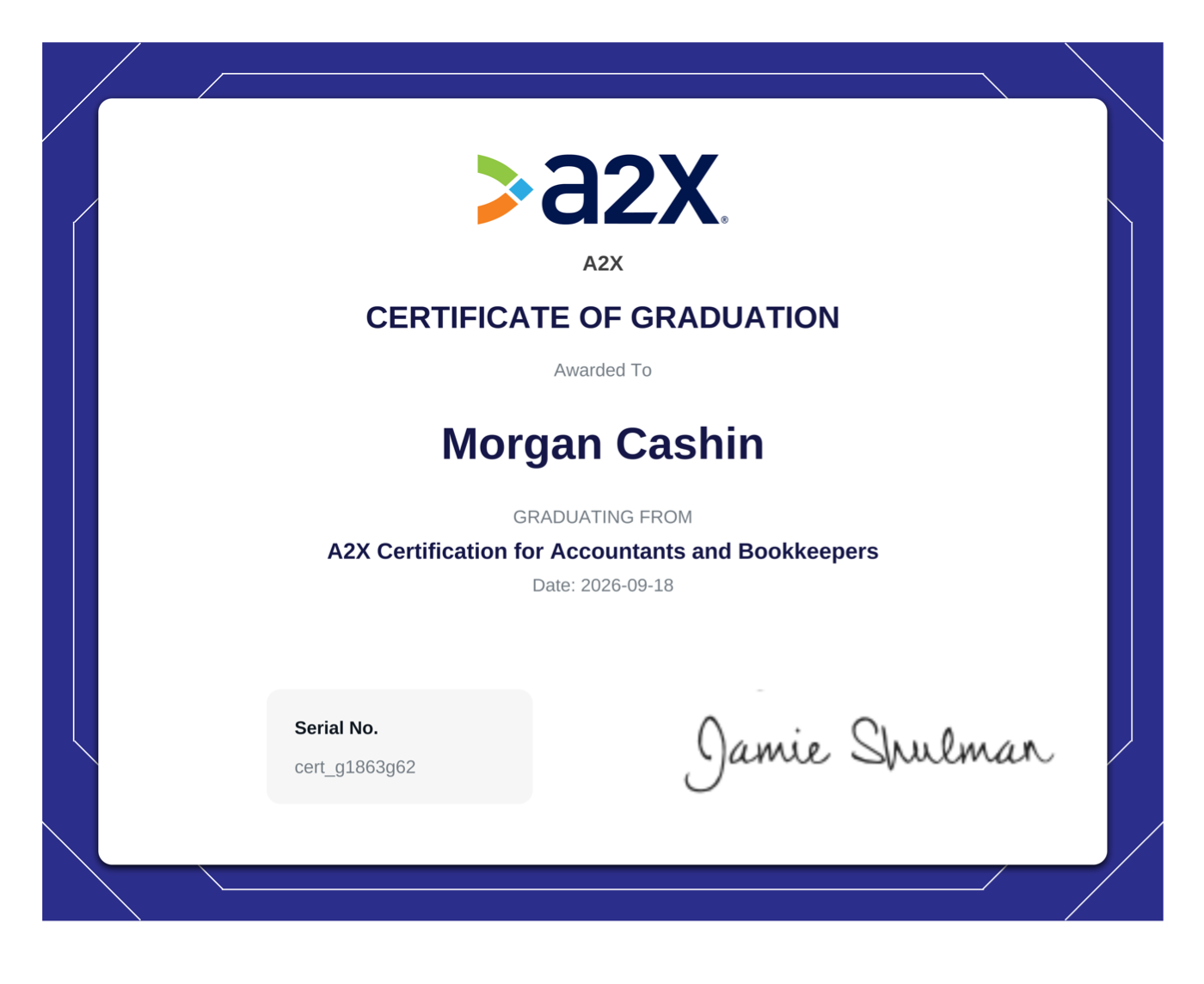
You can verify the qualification independently. I am listed in the Chartered Accountants Ireland firms directory, and I would encourage you to check that for any accountant you are thinking of trusting with your company's numbers. I am also a Xero Partner and Xero certified, at Associate and Professional level, since September 2026, and hold the A2X Certification for Accountants and Bookkeepers. The practice has a Google business profile if you would rather start there.


Built out of frustration, honestly.
Taking on my own clients — in Ireland, the UK, the United States, Spain and Mexico — the same three things happened over and over.
They had a question on a Sunday and no way to ask it. They were paying by the hour and had learned not to call. And when they did get an answer it arrived wrapped in so much professional hedging that they still could not tell what they were supposed to do.
None of that is because accountants are unhelpful. It is because the economics of the profession make a five-minute question expensive to answer. So I built the thing that fixes it: an AI assistant trained on UK and Irish tax rules that handles the questions which never needed a qualified human, sitting on top of a real accounting practice for everything that does.
I wrote the software myself. That is unusual for an accountant, and it is the reason the product understands the domain — the person deciding how deferred revenue should behave has actually prepared the schedules.
Three things I will not compromise on.
A qualified accountant signs the work
The AI assistant answers questions at two in the morning. It does not file your return, and it does not decide what position to take on a grey area. That is my job, and my name is on it.
Fixed monthly pricing
You know what it costs before you start. No hourly billing, no invoice arriving after a phone call you thought was a chat.
Plain answers
Most accounting advice is written to be defensible rather than useful. I would rather tell you what I think you should do, flag where I might be wrong, and let you decide.
What FoundrBooks is not.
Keep reading.
Start with a conversation.
Thirty minutes, no charge, no obligation. Bring your situation and I'll tell you honestly whether I can help and what it would cost.
FoundrBooks provides accounting and tax services to businesses in Ireland and the United Kingdom. Information on this site is general in nature and is not a substitute for advice on your own circumstances.